

Progressive Web Apps vs Native Apps Which Is Right for You

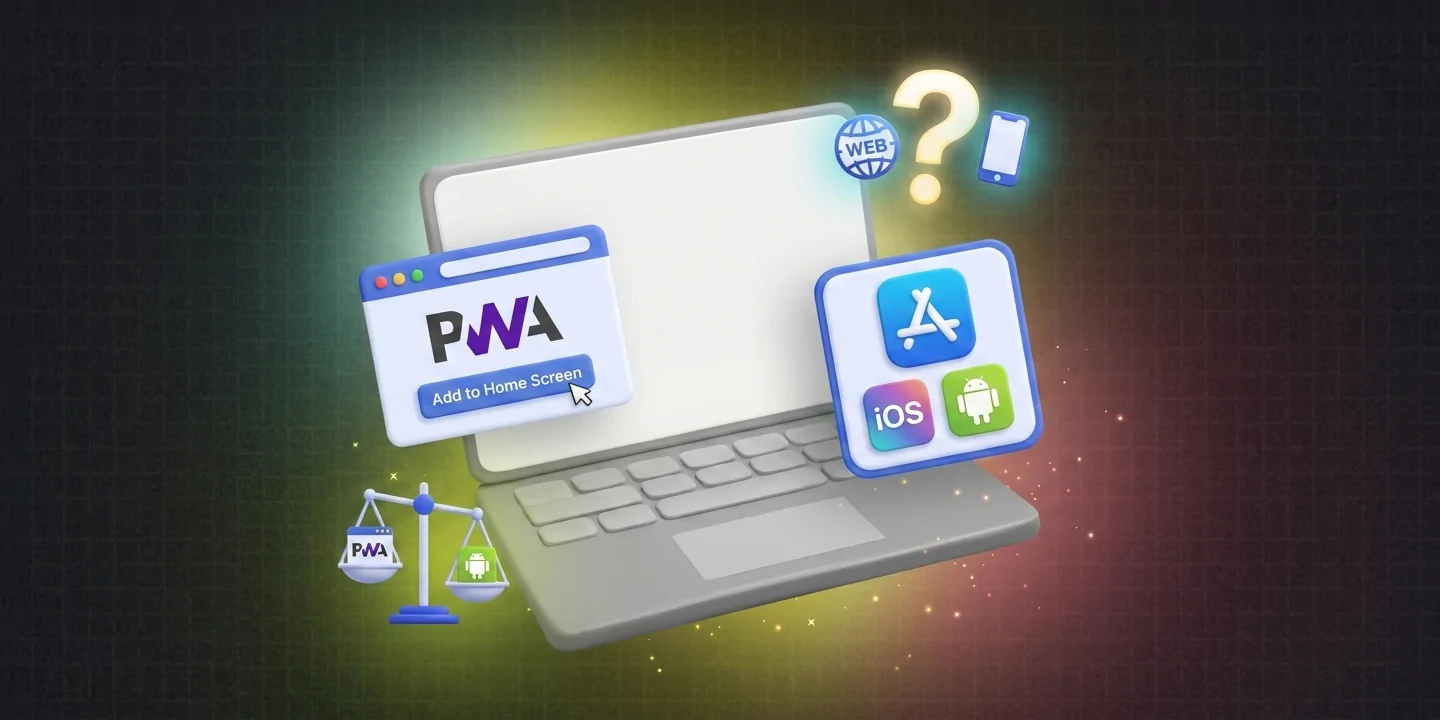
Few decisions carry as much weight for a product team as picking between progressive web apps vs. native apps. Get it wrong and you’re burning budget, shipping a frustrating experience, and hitting a growth ceiling before you’ve even found your footing. Get it right and everything from performance to discoverability to user retention starts pulling in the same direction. So what does the right call actually look like for your brand?
Understanding the Core Differences in App Development
Let’s start with definitions, because the trade-offs only make sense once you understand what each approach actually delivers. A native app is built specifically for iOS or Android using platform languages and SDKs. It lives in the App Store or Google Play and taps directly into device hardware. A progressive web app (PWA), on the other hand, is essentially a website that behaves like an app. Users can save it to their home screen straight from the browser, no App Store visit, no download prompt, no gatekeeping.
According to Google’s PWA documentation, progressive web apps combine the reach of the web with capabilities that were once exclusive to native software, including offline access, push notifications, and background sync. Apple, meanwhile, continues to invest heavily in native frameworks through its developer resources, which is why native still dominates high-performance categories like gaming and fintech.
Practically speaking, the decision turns on three things: how deeply you need to access device features, how important frictionless discovery is to your growth model, and how much runway you have for building and maintaining the product. If you’re still mapping out the fundamentals, our mobile app development guide walks through the full build process.
Comparing Performance and Speed Across Both Approaches
Performance is where the debate stops being theoretical. Native apps compile directly to platform code, so they render faster, handle complex animations more smoothly, and manage heavy computation without breaking a sweat. AR experiences, real-time gaming, apps that process large media files locally — these are categories where native remains the clear winner.
That said, PWAs have closed the gap significantly. With service workers caching assets intelligently, a well-built PWA can load in under two seconds even on an unstable connection. That matters because Google research shows the probability of a bounce increases 32% as page load time goes from one to three seconds. For a lot of products, that’s the performance conversation that actually matters.
Here’s how it breaks down in practice:
- Native: Best for graphics-intensive, hardware-dependent, or offline-heavy experiences.
- PWA: Excellent for content, commerce, and utility apps where speed and reach outweigh raw processing power.
- Battery and memory: Native manages device resources more efficiently at scale.
Whatever path you’re on, benchmark performance against business outcomes, not just technical specs. Our breakdown of mobile app analytics shows how to connect load times and retention to actual revenue rather than vanity metrics.
How Each Path Affects SEO and Discoverability
This is probably the sharpest divergence between the two approaches. PWAs live on the open web, which means every page is crawlable, indexable, and eligible to rank in search results. That creates a structural advantage for organic acquisition. A PWA can rank for informational queries, pull in long-tail traffic, and funnel users into an installable experience without any app store friction standing in the way.
Native apps don’t get indexed the same way. They rely on app store optimization for visibility, along with deep linking and app indexing to surface content in search. Skip those fundamentals and your discoverability collapses quickly. Our guide to ASO mistakes covers the errors that quietly suppress store conversion rates over time.
Search itself is also shifting in ways worth watching. As AI-driven answer engines reshape how users discover products, web-based experiences that publish structured, crawlable content are better positioned to appear in generative results. Brands investing in answer engine optimization often lean on web properties for exactly this reason: AI crawlers can access them more readily. For a fuller organic playbook, our app organic marketing resource is worth bookmarking.
Bottom line: if organic search and AI discoverability are central to your growth model, a PWA gives you more surface area to work with. If your acquisition strategy is paid-first and store-led, native’s discoverability limitations matter considerably less.
Evaluating User Experience and Engagement Signals
User experience shapes retention. Retention shapes lifetime value. Native apps still deliver the most polished, platform-consistent experience available. They integrate cleanly with system gestures, biometric login, camera, GPS, and hardware sensors, and they support richer push notifications. That’s why engagement-heavy categories like social and fitness overwhelmingly choose native.
PWAs have narrowed this gap on Android, where they now support push notifications, home screen installation, and offline modes. On iOS, capabilities remain more limited, though Apple has expanded web app support in recent releases. If a substantial share of your audience is on iPhone and your retention strategy depends heavily on push re-engagement, that constraint deserves real consideration before you commit to a path.
In our experience, the engagement data tells the story pretty clearly. Native apps typically post higher session frequency and longer session duration, partly because an installed icon and push notifications create habitual return visits. PWAs win on top-of-funnel accessibility since users can try the experience instantly without committing to a download. Strong design discipline matters either way, which is why working with a capable UI/UX agency often determines whether users stay or churn regardless of what’s running under the hood.
Weighing Cost, Maintenance, and Long-Term Scalability
Budget frequently settles the debate. A native strategy often means building and maintaining two separate codebases, one for iOS and one for Android, which multiplies development and ongoing maintenance costs considerably. Cross-platform frameworks like React Native or Flutter reduce this burden, but they still require platform-specific tuning to feel right on each OS.
PWAs run on a single codebase that serves every device with a browser. That lowers upfront cost, simplifies updates (changes deploy instantly without waiting on store review), and shortens time to market. For startups validating an idea or businesses with lean teams, that kind of efficiency is genuinely hard to ignore. Our detailed app development cost breakdown quantifies these differences by platform and scope.
Think through the total cost of ownership:
- Build cost: PWAs are typically cheaper to launch than dual native apps.
- Maintenance: Native requires ongoing updates for OS releases across two platforms.
- Update velocity: PWAs bypass store review, so you ship fixes immediately.
- Monetization: Native supports in-app purchases through store billing, while PWAs avoid store commissions but must integrate their own payment flows.
Scalability also depends on your roadmap. If you anticipate needing advanced hardware features or store-based subscription billing, native tends to pay off long term. If reach and rapid iteration are your priorities, a PWA scales more affordably. Either way, anchoring the decision to a long-term growth architecture keeps short-term savings from turning into future limitations. For a platform-specific view, our iOS vs. Android guide adds useful context.
Making the Right Decision for Your Business Goals
Here’s the thing: there’s no universal winner. The right choice maps to your audience, your category, and how you plan to grow. This framework should help you decide with confidence.
Choose native when you need deep hardware access, high-performance graphics, offline reliability, store-based monetization, or aggressive push-driven re-engagement. Gaming, fintech, health tracking, and media-heavy products usually justify the investment.
Choose a PWA when discoverability, fast iteration, lower cost, and instant access drive your priorities. Content publishers, e-commerce brands, booking platforms, and utility tools tend to thrive here, especially when organic search is the primary acquisition channel.
Consider a hybrid approach when neither option fully fits on its own. What we’ve seen work really well for a lot of brands is launching a PWA first to capture web traffic and validate demand, then building native once retention and monetization numbers justify the added spend. This staged model reduces risk while keeping your options open.
Whatever path you choose, pair it with a clear go-to-market strategy and a realistic acquisition plan. Our guide to user acquisition strategy helps you match the technology to how you’ll actually attract and retain users in the real world.
Conclusion
The progressive web app versus native decision comes down to priorities. PWAs win on cost, reach, and discoverability, while native wins on performance, engagement, and monetization. Neither is universally superior. Map your choice to your audience, your category, and your growth model, and seriously consider a staged hybrid path if you’re not ready to commit fully to either. Get that alignment right, and your technology stack becomes an accelerator rather than a constraint.
FAQs
Are progressive web apps better for SEO than native apps?
In most cases, yes. PWAs live on the web, so their pages are crawlable and indexable, making them eligible to rank in search and surface in AI answer engines. Native apps rely on app store optimization and app indexing, which offer considerably less organic search surface area.
Can a PWA replace a native app entirely?
For content, commerce, and utility products, often yes. But if you require deep hardware access, high-end graphics, or store-based subscription billing, native still delivers advantages a PWA can’t fully replicate, particularly on iOS where web capabilities remain more constrained.
Which is cheaper to build and maintain?
PWAs are typically more affordable because they use a single codebase across all devices and update instantly without store review. Native development often requires separate iOS and Android builds, which increases both initial development costs and ongoing maintenance overhead.
Do PWAs work on iPhones?
Yes, though with limitations. Apple supports home screen installation, offline modes, and some notification features, but native still offers richer integration with system-level capabilities. If your audience skews heavily toward iOS and your retention model depends on push re-engagement, that’s worth weighing carefully.
Should I start with a PWA and build native later?
This staged approach works well for a lot of brands. Launch a PWA to capture web traffic, validate demand, and iterate quickly, then invest in native once retention and monetization numbers justify the added cost and complexity.

Related Articles

Best Mobile App Development Agencies How to Choose

Google Play Console Metrics Overhaul: What ASO Teams Need to Know