
Frontend vs Backend Web Development, Choosing the Right Agency

Picking the right agency for frontend vs. backend web development shapes everything that comes after. Get it wrong and you end up with a site that looks gorgeous but falls apart under real traffic, or one that’s technically bulletproof but bleeds users within the first few seconds. As expectations keep rising and search engines grow pickier about technical quality, brands genuinely need partners who understand both sides of the stack. If you’re fuzzy on where one ends and the other begins, start by getting a clear picture of what each layer actually does.
Understanding Client-Side and Server-Side Development
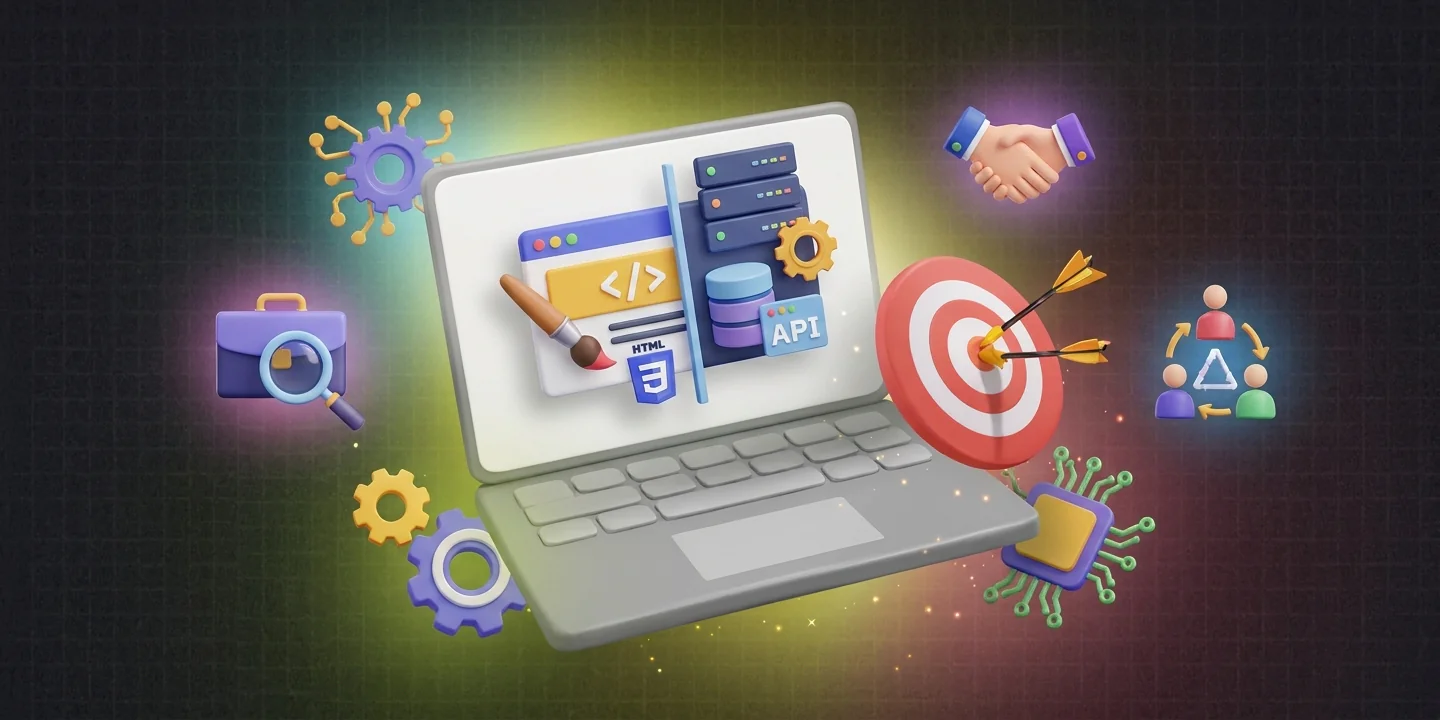
Before you evaluate any agency, you need a working grasp of the two disciplines. Frontend development, also called client-side development, covers everything a visitor sees and touches: layouts, buttons, animations, menus, and the responsive behavior that makes a site feel snappy or painfully slow. The core building blocks are HTML, CSS, and JavaScript, with popular frameworks like React, Vue, and Svelte handling the heavy lifting on more complex projects. When someone says a website “just feels smooth,” what they’re really describing is careful frontend craftsmanship.
Backend development (server-side) powers everything behind the scenes. Databases, application logic, APIs, authentication, and server infrastructure all live here. Languages like Python, Ruby, and PHP, along with Node.js, handle data processing, security, and third-party integrations. According to the Stack Overflow developer survey, JavaScript and Python consistently rank among the most-used technologies worldwide, which tells you something about how deeply intertwined these two layers have become.
The distinction matters in practice because a beautiful interface sitting on a fragile backend will collapse the moment traffic spikes, while a robust backend paired with a frustrating interface sends users straight to a competitor. If you want a fuller primer, our guide to what is web development walks through the fundamentals clearly.
Why Full-Stack Expertise Drives Better Performance
Here’s the thing about siloed teams: the handoffs create invisible drag. APIs return bloated payloads the interface doesn’t need, images ship without optimization, and render-blocking scripts pile up because nobody owns the full chain. In our experience, this is where projects that looked great in staging quietly fall apart in production. A full-stack team designs the data flow and the interface together, which cuts waste at every step.
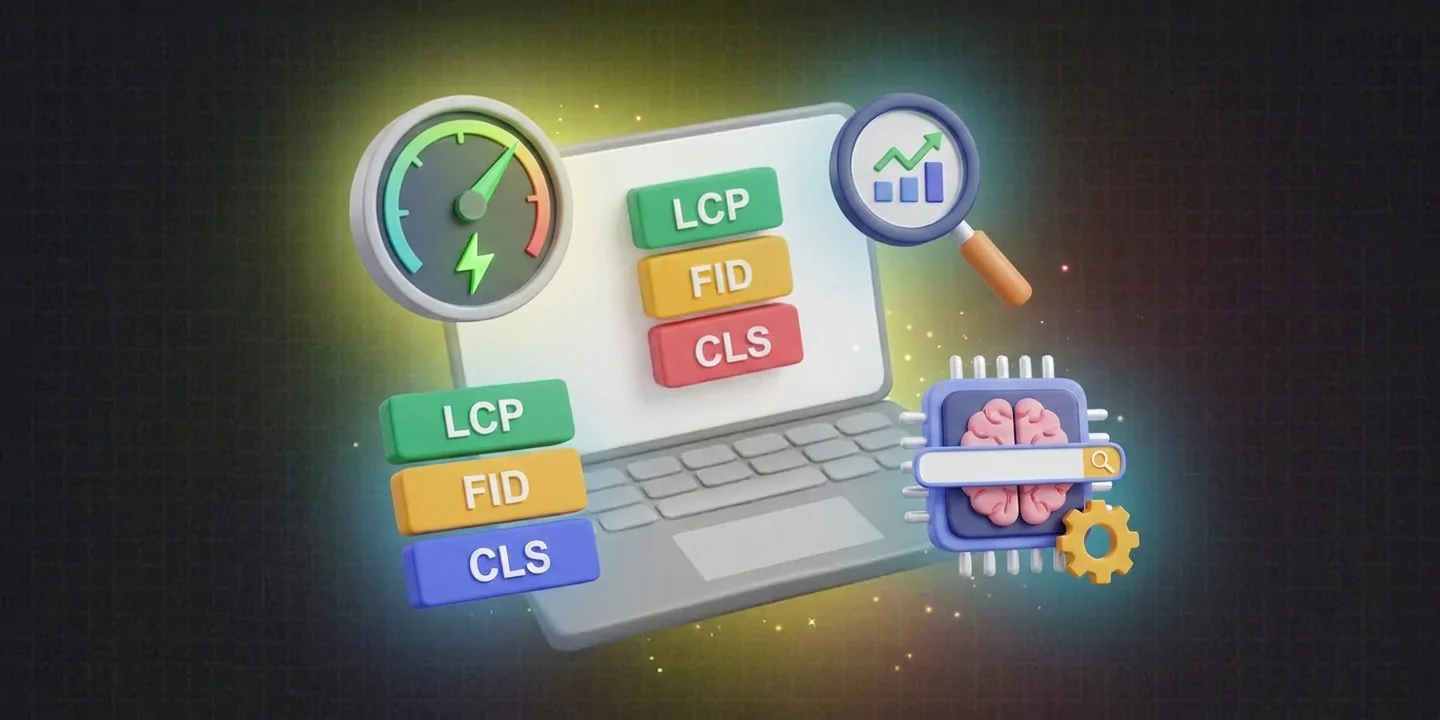
That coordination has a direct impact on Core Web Vitals, the Google signals covering loading speed, interactivity, and visual stability. Google’s own Web Vitals documentation confirms these metrics influence both rankings and conversion rates. Our breakdown of Core Web Vitals for SEO gets into why backend response times and frontend rendering have to be tuned together, not in isolation.
Take a concrete example: a slow database query delays the Largest Contentful Paint. The frontend team can’t fix it because the bottleneck is upstream. The backend team doesn’t prioritize it because they don’t see the user impact. Integrated expertise collapses that gap. One group owns the entire chain, from server query to pixel on screen, and that accountability is what separates reliable products from fragile ones.
How Integrated Teams Improve SEO and AI Search Visibility
Search visibility now depends on technical decisions that touch both layers. Clean semantic HTML, structured data, and accessible markup on the frontend help crawlers understand your content. On the backend, server-side rendering, efficient caching, and correct HTTP status codes determine whether search engines can index your pages at all. These aren’t separate concerns; they’re the same problem viewed from different angles.
The issue gets especially acute with JavaScript-heavy applications. When content only loads after client-side rendering finishes, crawlers and AI answer engines can miss it entirely. That’s not some fringe edge case; what we’ve seen is that this indexability gap quietly tanks rankings for otherwise well-built sites. Google’s JavaScript SEO guidance recommends server-side or hybrid rendering specifically because it bridges that frontend-backend divide.
AI search adds another layer to this. Large language models tend to pull answers from well-structured, fast-loading sources. Agencies fluent in answer engine optimization understand how to structure both content and infrastructure so your brand surfaces in AI-generated results. When you’re evaluating a partner, ask directly how they handle rendering strategy, schema markup, and indexability across the full stack. The strongest teams treat SEO as an engineering discipline, not a checklist item bolted on after launch.
Evaluating an Agency’s Scalability and Architecture Approach
Strong performance today means very little if the site buckles as you grow. Scalability is where backend architecture and frontend efficiency converge, and what separates an agency that plans ahead from one that hands you a bill for emergency fixes six months later. A capable partner thinks about traffic spikes, data growth, and feature expansion from day one, not after your servers fall over during a product launch.
Ask prospective partners how they approach these areas:
- Infrastructure choices: Do they use scalable cloud services, content delivery networks, and edge computing to keep response times low globally?
- Modular architecture: Can new features ship without rewriting the whole system? Component-based frontends and microservices backends make this possible.
- Database design: Are queries optimized and indexed to handle millions of records without slowing down?
- Monitoring and testing: Do they build automated testing and performance monitoring into their workflow?
Our guide on building a scalable site covers these principles in depth. When you’re comparing vendors, the questions in our agency evaluation checklist help separate genuine technical capability from polished sales decks. Bottom line: a team that can explain its architecture in plain language almost always knows what it’s actually doing.
Signs of Genuine Full-Stack Capability in a Web Partner
A lot of agencies claim full-stack services, but real integrated expertise is rarer than the marketing suggests. Here’s how to verify it before you sign anything. Start with the portfolio, and look past the pretty screenshots. Simple brochure sites tell you almost nothing useful; you want to see projects involving dynamic data, user authentication, and third-party integrations. Moburst’s portfolio of client work gives you a sense of what it looks like when frontend polish and backend robustness actually come together in production, not just in a pitch deck.
Second, pay attention to how they discuss trade-offs. Skilled engineers think out loud: server-side rendering versus static generation, monolith versus microservices, custom builds versus platform solutions. Our comparison of WordPress vs Shopify reflects the kind of nuanced, situation-specific thinking you want to hear from a prospective partner.
Third, confirm they actually follow Google’s helpful-content principles. Google’s helpful content guidance rewards sites built by people who genuinely understand what users need. That philosophy should show up in both engineering and content decisions, not just in a page titled “Our Philosophy.”
Finally, evaluate how they communicate. A strong partner explains technical concepts without condescension, sets realistic timelines, and brings you into decisions rather than presenting finished fait accompli. For a broader framework, see our advice on choosing a web development agency and how to choose an agency that scales alongside your business over time.
Aligning Design, Development, and Growth Goals
Technical excellence only pays off when it’s connected to actual business outcomes. The strongest agencies fold design, development, and growth into a single coherent strategy rather than treating them as sequential handoffs. Frontend interfaces should guide users toward conversion. Backend systems should capture the data that feeds marketing decisions. And every technical choice should map to something measurable.
This is why UI/UX, engineering, and marketing either belong under one roof or need to operate in genuinely tight collaboration. Our overview of the role of a UI/UX agency explains how design decisions shape both usability and search performance simultaneously. When these functions are aligned, you avoid the expensive cycle of shipping something that looks good but fails to convert or rank.
Before committing to any partner, map your growth goals to specific technical requirements. Planning to expand into new markets? You’ll need internationalization support and multi-region infrastructure. If content marketing drives your funnel, you need a fast, fully crawlable CMS that won’t become a bottleneck. An integrated full-stack partner translates those ambitions into architecture that actually supports them, from launch through scale.
The takeaway: Frontend and backend development are two halves of one system. Evaluating an agency means confirming they have genuine command of both. Prioritize partners who connect performance, SEO, and scalability directly to your business goals. In today’s competitive landscape, integrated technical expertise isn’t optional. It’s the foundation of every website that loads fast, ranks well, and keeps growing without breaking.
Frequently Asked Questions
What is the difference between frontend and backend development?
Simply put: frontend is what your users see and click on, built with HTML, CSS, and JavaScript. Backend is everything running on the server that users never see directly, including databases, business logic, and the infrastructure that keeps data moving securely. Full-stack development combines both, letting a single team build complete, cohesive applications from the interface all the way down to the infrastructure layer.
Do I need a full-stack agency or separate specialists?
For most projects, an integrated full-stack team reduces handoff friction, improves performance, and speeds up delivery. Separate specialists can work well for very large or highly specialized systems, but they require strong coordination and clear ownership. Before deciding, honestly assess the complexity of your project and your internal capacity to manage multiple vendors simultaneously.
How does full-stack development affect SEO?
SEO depends on both layers working together. Backend rendering and caching determine whether search engines and AI tools can actually index your content, while frontend markup and load speed influence rankings and user experience. Integrated teams optimize the entire chain, which is increasingly essential for strong visibility in both traditional search and AI-generated results.
What questions should I ask a web development agency?
Ask about their rendering strategy, scalability planning, database design, testing processes, and how they measure performance over time. Request portfolio examples that demonstrate real complexity, and ask them to walk you through technical trade-offs in plain language. Our evaluation checklist provides a complete list of questions worth asking.
How do I know if an agency can scale with my business?
Look for cloud-based infrastructure, modular architecture, well-indexed databases, and automated monitoring built into their standard workflow. A genuinely scalable partner plans for traffic growth and feature expansion from the start, not as an afterthought. Review case studies showing sustained performance under real growth conditions, and confirm they can explain their scaling approach without resorting to jargon.

Related Articles

Mobile Web Development for App-First Brands

How to Choose a Web App Development Agency That Scales