

Choosing from a crowded field of best mobile app development agencies might genuinely be the highest-stakes decision a product team makes all year. A great partner ships iOS and Android apps that feel polished and effortless, then stays involved long after launch day. A mediocre one drops a buggy build in your lap and stops returning calls. Figuring out which you’re dealing with before ink hits paper is the real challenge, and most teams don’t ask the right questions early enough.
What Separates Top App Development Agencies From the Rest
Every agency on the planet claims technical excellence. The ones worth hiring prove it through outcomes. When you’re evaluating candidates, look past the polished pitch decks and ask for evidence: live apps, retention numbers, clients who’ve renewed year after year. Google’s EEAT principles (experience, expertise, authoritativeness, and trustworthiness) apply just as much to vendor selection as they do to content.
A serious agency demonstrates first-hand experience across categories and platforms. They know that a fintech app carries entirely different security and compliance demands than a gaming or social product. More importantly, they can explain why they chose a specific architecture, not just rattle off a list of tools they happened to use on the last project.
- Verifiable portfolio: live apps you can actually download and test yourself.
- Transparent process: clear sprints, solid documentation, and code ownership that stays with you.
- Measurable results: retention rates, crash data, and store ratings rather than vanity metrics.
- Longevity: repeat engagements are a reliable signal of trust and consistent delivery.
If you want a deeper vetting framework, our guide on how to choose an agency breaks down red flags and the specific questions worth raising during discovery calls.
Native iOS and Android Development That Balances Speed and Quality
The native versus cross-platform debate sits at the center of almost every build decision. Native development, Swift for iOS and Kotlin for Android, delivers the smoothest performance, deepest hardware access, and the fastest adoption of new platform features. Apple’s Swift documentation makes this clear: native apps get immediate support for capabilities like Live Activities and on-device intelligence that cross-platform frameworks routinely lag behind on by months, sometimes longer.
That said, React Native and Flutter have matured considerably. In our experience, a capable agency will recommend the right approach for your roadmap rather than defaulting to whatever their team happens to be most comfortable with. Push them to justify the recommendation against your actual performance requirements, budget, and timeline. If they can’t do that in plain language, that’s a signal worth paying attention to.
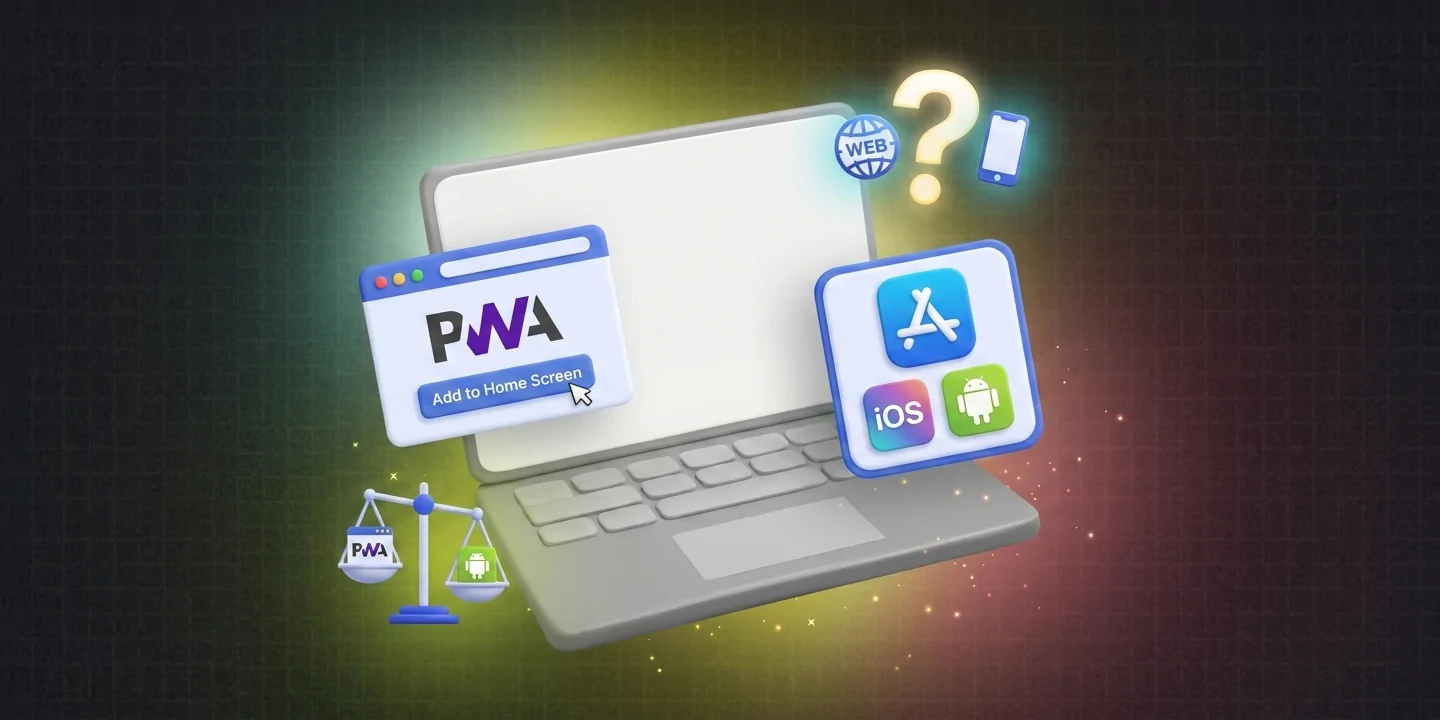
Understanding the platform differences also helps you challenge those recommendations with confidence. Our comparison of iOS and Android development covers where each platform demands separate attention, from design guidelines to release cycles. And if you’re still weighing web-based delivery, it’s worth reviewing native versus PWAs before committing engineering resources in either direction.
Whatever stack you land on, insist on real-device testing, automated CI/CD pipelines, and a documented QA process. These are the practices that separate agencies who ship reliably from those who scramble every time Apple or Google drops a new OS update.
Why UX Excellence Drives Retention and Revenue
Brilliant engineering means surprisingly little if users bail after one session. Retention lives and dies on experience. Research from Nielsen Norman Group consistently shows that intuitive design reduces support costs and lifts task completion rates, both of which compound into real revenue over time.
Here is the thing: the best agencies treat UX as a discipline, not a final coat of paint. That means user research, wireframing, prototyping, and usability testing before a single line of production code gets written. They design for accessibility from day one and account for edge cases like poor connectivity and one-handed use during a cramped subway commute.
Look for a partner who ships design systems rather than one-off screens. A consistent component library speeds future development and keeps the experience coherent as the product scales. To understand what a dedicated design team actually contributes across the full product lifecycle, read our overview of the role of a UI/UX agency.
Ask candidates how they measure design success. Strong answers reference task completion rates, time-to-value, and onboarding drop-off points. Weak answers are just subjective opinions about whether something looks nice. Design that performs is design that can be proven with data, and any agency worth hiring knows the difference.
Post-Launch Growth Support and App Store Optimization
Launch day is a starting line, not a finish. The agencies worth hiring stay engaged after release, treating growth as an ongoing engineering and marketing effort. What we’ve seen repeatedly is that this is the single biggest gap between a development shop and a genuine product partner.
Post-launch support should cover three pillars:
- Technical maintenance: monitoring crashes, patching bugs, and adapting to new OS releases. Android’s performance guidance updates frequently, and a good partner stays current.
- Visibility: ongoing app store optimization to protect and grow organic installs.
- Acquisition: paid and organic campaigns that scale downloads profitably over time.
ASO deserves real attention because store algorithms shift constantly. If your rankings have slipped, our walkthrough on fixing a failing listing shows how quickly targeted changes can recover conversion. For sustained demand, pair ASO with a documented user acquisition strategy so growth doesn’t stall once the initial buzz fades.
Agencies that own both build and growth eliminate the friction of handing your product off to a separate marketing vendor. That continuity matters more than most people realize: the people who understand your code also understand your funnel, and that shared context is hard to recreate from scratch.
How to Vet Pricing, Contracts, and Long-Term Fit
Budget conversations reveal a lot about an agency’s honesty. Vague estimates and pressure to sign quickly are warning signs worth taking seriously. Transparent partners break costs down by platform, feature scope, and phase, and they actually explain what drives the numbers. Our detailed breakdown of app development costs gives you realistic benchmarks so you can spot quotes that are inflated or suspiciously low.
Beyond price, read the contract carefully for code ownership, intellectual property rights, and exit terms. You should own your source code outright, full stop. Confirm who holds developer account credentials and how knowledge transfer works if you part ways down the road.
Cultural and communication fit matters more than most teams anticipate. You’ll be collaborating closely for months, so treat responsiveness during the sales process as a preview of the actual working relationship. An agency that goes quiet before you’ve even signed won’t magically improve once the project kicks off.
Bottom line: think in years rather than sprints. The most valuable engagements evolve into long-running partnerships built on a long-term growth architecture. Ask candidates how they think about version two, three, and beyond, and whether their roadmap instincts actually match your ambitions.
Questions to Ask Before You Sign With Any Agency
Arriving at your shortlist with sharp questions protects you from expensive mistakes. Use these to pressure-test each candidate and compare their answers side by side.
- Can I download and test three apps you’ve shipped in my category?
- Who owns the code, and how is it documented and handed over?
- What does your QA, security, and release management process actually look like?
- How do you measure UX success beyond visual polish?
- What does post-launch support include, and for how long?
- How do you approach app analytics and iteration after launch?
The answers should be specific and confident. Be cautious of teams that deflect on ownership questions or can’t articulate a measurable growth plan. For a broader launch checklist, our guide on how to launch an app complements this vetting process well. If you also need marketing firepower, it’s worth reviewing how to select a mobile marketing agency alongside your development partner.
Conclusion
The best mobile app development agencies combine native engineering with real UX discipline and genuine post-launch growth support. Prioritize verifiable results, transparent pricing, outright code ownership, and a long-term mindset. Test their portfolio yourself, interrogate their process, and choose the partner whose answers are specific rather than aspirational. Do that consistently, and you build a product that ships well and keeps growing.
FAQs
How much does it cost to hire a mobile app development agency?
Pricing depends heavily on complexity, how many platforms you’re targeting, and what post-launch support looks like. A straightforward single-platform app can start in the low tens of thousands, while feature-rich native builds for both iOS and Android push significantly higher. Always ask for a phased cost breakdown so you can match scope to budget realistically.
Should I build native or cross-platform?
Native delivers the best performance and the earliest access to new platform features, which makes it the right call for demanding or long-lived products. Cross-platform can reduce both cost and timeline when your app is relatively simple. A good agency makes this recommendation based on your specific roadmap, not their preferred toolset.
What should post-launch support include?
At minimum: crash monitoring, bug fixes, OS-update compatibility, ongoing app store optimization, and acquisition support. The strongest partners treat launch as the beginning of an iterative growth relationship, backed by solid analytics and a clear plan for future versions rather than a handoff and goodbye.
How do I verify an agency’s expertise?
Download and actually use their shipped apps, read verified client reviews, and ask for retention and rating data. Request references from clients in your specific category and confirm whether those engagements were renewed. Real evidence beats marketing claims every single time.
Who owns the app code after development?
You should own your source code and intellectual property outright. Get it confirmed in writing before you sign anything, along with clear terms covering developer account access and knowledge transfer if the relationship ends.


Related Articles

Google Play Console Metrics Overhaul: What ASO Teams Need to Know

How to Fix a Failing App Store Listing in 7 Days